AGIBOT Reaches 10000 Humanoid Robots, Scales to 10000 Units
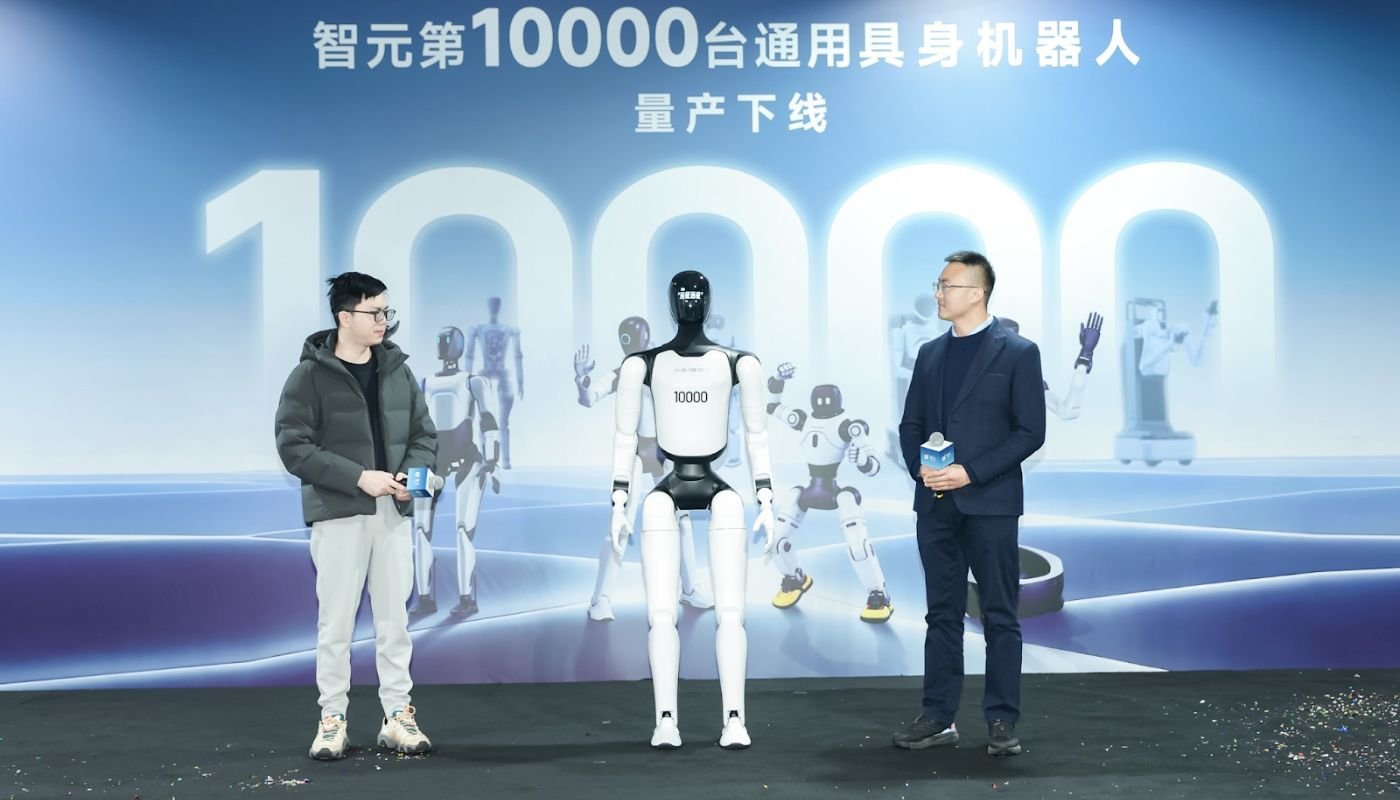
China based humanoid robot manufacturer AGIBOT has reached a cumulative total of 10000 units shipped, marking one of the fastest production ramps in the sector to date. According to reporting by eWeek, half of those units were delivered in just the past three months, underscoring an acceleration from early pilot builds to sustained industrial scale output.
The company took nearly two years to ship its first 1000 humanoid robots. Another year was required to increase cumulative shipments to 5000 units. The most recent jump from 5000 to 10000 units, completed within a single quarter, signals a significant shift in manufacturing throughput and supply chain maturity.
Market share and global positioning
Citing Omdia data released in January, the report states that AGIBOT previously led the global humanoid robot market with roughly 5200 units shipped at that time. Unitree followed with about 4200 units. Major United States based developers including Tesla, Agility Robotics, and Figure reportedly accounted for a combined total of around 150 units.
With the latest production surge, AGIBOT is widening that gap. The scale of output places the company among the most commercially active humanoid robot suppliers as embodied AI systems move beyond controlled pilots and into operational environments.
Deployment across commercial settings
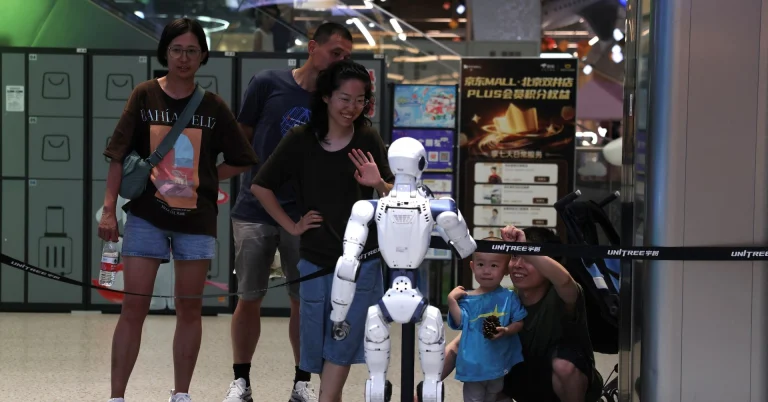
AGIBOT states that thousands of its humanoid robots are already operating in real world settings across China, North America, Europe, and the Middle East. Documented use cases include retail showrooms, stores, hospitals, and industrial production lines where robots work alongside human staff.
According to a company statement, large scale field deployment is contributing directly to system refinement. Continuous operation in varied environments provides performance data that can be used to improve reliability and expand application capabilities over time. The company describes progress at this scale as driven by coordinated advances across hardware, software, and supply chain systems rather than isolated technical pilots.
From technical validation to scalable demand
AGIBOT CTO Peng Zhihui characterized the 10000 unit milestone as evidence of a broader structural shift. As manufacturing processes standardize and supplier networks mature, the company reports a transition from niche deployments to broader commercial demand.
For robotics practitioners and integrators, the significance lies less in the headline shipment number and more in what it implies about repeatability and cost structure. Sustained quarterly output at this level suggests tighter integration between mechanical design, embodied AI software stacks, and contract manufacturing capacity.
The rapid scale up also highlights a widening divergence in global commercialization timelines. While several Western developers remain focused on extended pilot programs and validation cycles, Chinese manufacturers are demonstrating higher unit volumes in operational contexts.
Whether this production momentum translates into durable long term market leadership will depend on field reliability, service infrastructure, and total cost of ownership. However, reaching 10000 shipped humanoid robots establishes AGIBOT as one of the first companies to push humanoid robotics beyond experimental batches and into measurable industrial scale deployment.
Source: eweek.com