
Ubtech humanoid revenue jumps 2200% in 2025
Ubtech Robotics reported a sharp acceleration in its humanoid robot business in 2025, with revenue from full size embodied intelligence humanoid robots rising 2203.7% year on year to RMB 821 million. The segment became the company’s largest revenue contributor, accounting for 41.1% of total revenue.
Total revenue for 2025 reached RMB 2.001 billion, up 53.3% from the prior year. Net losses narrowed by approximately 32%, falling from RMB 1.16 billion to RMB 790 million. Adjusted EBITDA loss also improved, declining from RMB 609 million to RMB 438 million.
Walker S2 enters scaled production
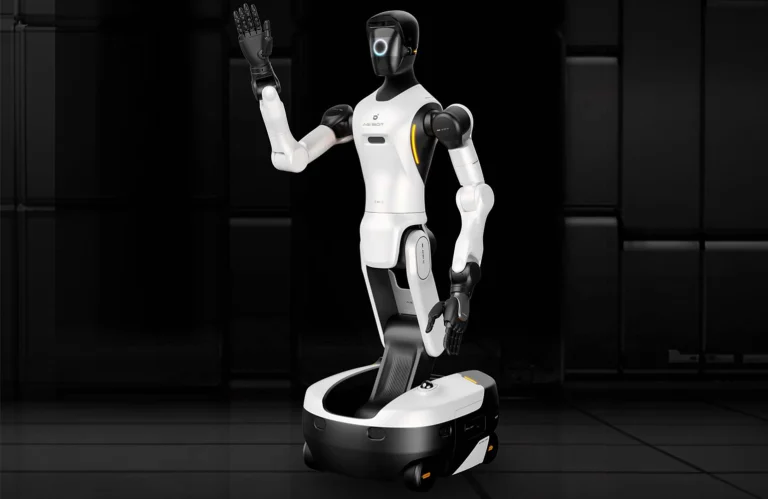
The company attributed the humanoid revenue surge primarily to the mass production and delivery of its Walker S2 industrial humanoid robot. Annual sales reached 1,079 units, compared with a very low base in 2024, marking the first year of four digit shipments for the platform.
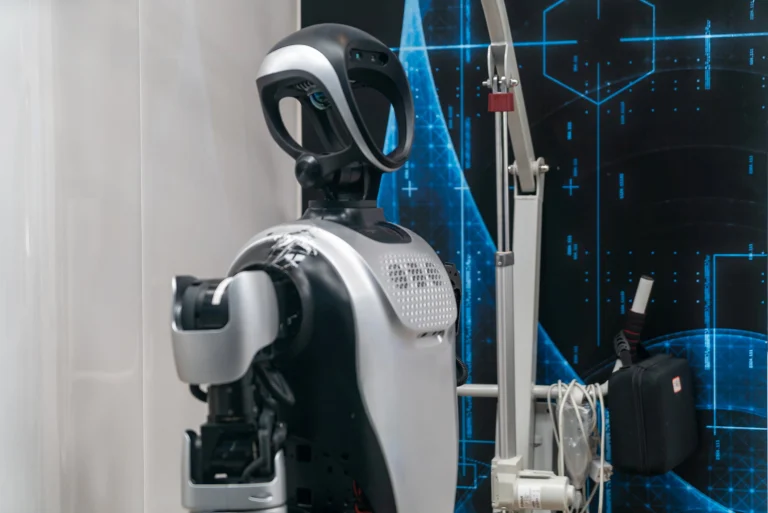
Ubtech disclosed that annualized production capacity for Walker S2 now exceeds 6,000 units. The robot features 52 degrees of freedom, supports stable handling of 15 kg payloads, and uses a hot swappable autonomous battery replacement system designed for continuous 24 hour operation.
Deployment scenarios cited in the report include automotive manufacturing, intelligent manufacturing, and smart logistics. Typical tasks include material handling, sorting, and quality inspection. The company stated that by the end of 2025 it had accumulated extensive industrial manufacturing data from these deployments, particularly in automotive environments.
Margin expansion driven by revenue mix
Gross margin improved from 28.7% to 37.7%, an increase of nine percentage points. The shift in revenue mix toward higher margin humanoid robots was a key driver of this expansion.
Gross profit rose from RMB 374 million to RMB 754 million. At the same time, expense ratios declined, partly due to revenue growth diluting fixed costs. Sales expense ratio fell from 40.1% to 23.5%, administrative expense ratio from 28.3% to 16.8%, and research and development expense ratio from 36.6% to 25.4%.
In absolute terms, research and development spending excluding share based compensation increased from RMB 478 million to RMB 508 million, reflecting continued investment in embodied AI and humanoid robotics technology.
Accounts receivable and impairment risk
Accounts receivable rose to RMB 1.302 billion from RMB 913 million a year earlier. Credit impairment losses were RMB 151 million in 2025, largely unchanged from RMB 156 million in 2024. The company noted delayed payments from certain government related clients, highlighting an area that may affect cash flow management.
Other robotics segments decline
Revenue from other intelligent robot products and solutions, including logistics robots, declined 16.9% to RMB 629 million. Ubtech attributed the drop primarily to project delivery and acceptance timing at year end. Global shipments of logistics robots approached 3,000 units across six countries and more than 60 cities.
Revenue from other smart hardware products, such as robotic lawn mowers, pool cleaning robots, vacuum robots, and pet devices, increased 6.4% to RMB 499 million.
Balance sheet strengthened through share placements
Ubtech completed three H share placements in 2025, raising approximately RMB 5.78 billion in total. Cash and cash equivalents rose to RMB 4.888 billion by year end. The leverage ratio fell from 71.6% to 16.0%, while the current ratio improved from 1.4 times to 3.0 times.
The company also moved to strengthen its supply chain position in humanoid robotics by acquiring 29.99% of Zhejiang Fenglong Electric Co., Ltd., a servo motor manufacturer, and proposing a partial tender offer for an additional 13.02% stake.
Commercialization trajectory under scrutiny
Ubtech’s 2025 results signal a transition from limited pilot deployments to early stage scaled commercialization of industrial humanoid robots. However, the company remains loss making, and sustainability of gross margins as production volumes increase will be closely watched.
Key metrics for 2026 include further growth in humanoid shipments, margin stability above current levels, progress in receivables collection, and operational integration of upstream component capabilities. For industry observers, Ubtech’s performance provides one of the clearest data points to date on the commercial ramp of full size humanoid robots in manufacturing settings.
Source: moomoo.com