
RBC: Humanoid Robotics Could Reach $9T Market by 2050
Humanoid robots could represent a $9 trillion total addressable market by 2050, according to a new report from RBC Capital Markets, positioning the sector among the most significant long term opportunities in global automation.
The analysis, authored by Global Autos Analyst Tom Narayan and published in March 2026, projects large scale deployment of humanoid systems across manufacturing, logistics, agriculture, retail, and households. While hardware sales form the foundation of the estimate, RBC argues that software and services could unlock an additional $3 trillion in value through app based ecosystems layered on top of physical robot platforms.
Industrial demand to drive early scale
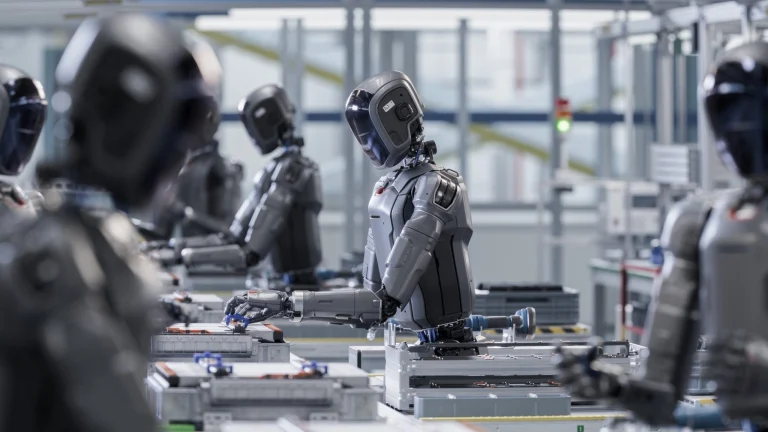
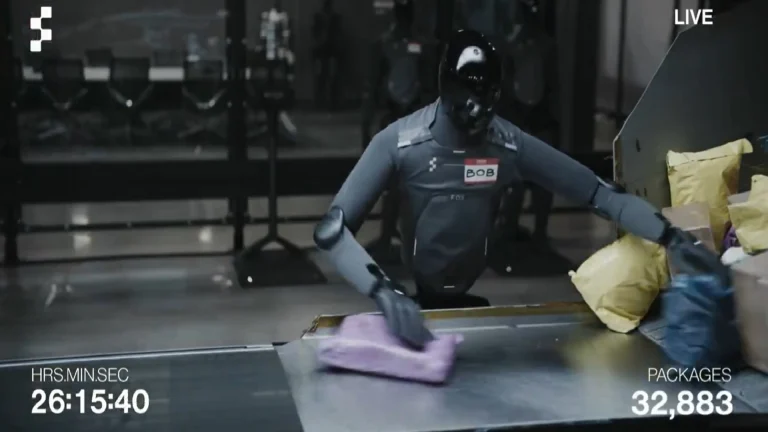
RBC expects initial adoption to concentrate in structured, labor intensive environments such as warehouses, factories, and agricultural operations. In these settings, repetitive workflows and ongoing labor shortages create clearer return on investment profiles, even for humanoid systems with limited dexterity and narrowly defined task libraries.
By contrast, fully capable household humanoids able to manage cooking, cleaning, and caregiving are projected to require more than 20 years to reach mainstream adoption. These use cases demand advanced manipulation, reliable physical interaction in unstructured environments, and high level autonomous planning that remain under active development.
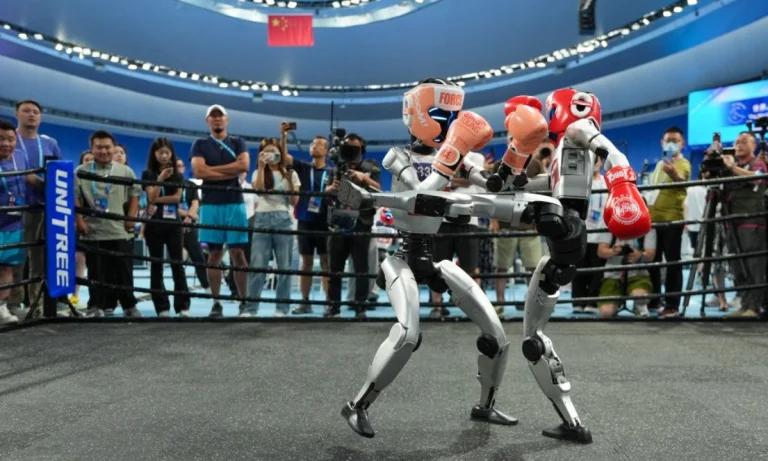
Even so, niche consumer models with constrained functionality, such as entertainment or specialized assistance applications, could reach the market within five years, primarily targeting early adopters.
China positioned for majority share
The report estimates that China could account for approximately 61 percent of the projected $9 trillion humanoid market. This outlook reflects manufacturing scale, strong domestic demand, and sustained government backing through venture funding and infrastructure investment.
RBC estimates that household applications alone could represent roughly $2.9 trillion, or about one third of the overall humanoid opportunity, with China showing particularly high penetration potential.
Regionally, the competitive landscape may split along hardware and software lines. Chinese firms are described as holding advantages in hardware manufacturing and supply chain execution, while companies in the United States and Europe are viewed as leading in software innovation and operating systems. The market remains fragmented, with no clear dominant platform or manufacturer.
From hardware sales to recurring software revenue
Beyond hardware revenue, RBC highlights the potential for recurring income through software ecosystems. Drawing parallels to smartphone app stores, the report envisions humanoid robots operating on hybrid pricing models that combine one time hardware purchases with ongoing subscriptions for downloadable skills and capabilities.
Applications could range from caregiving routines to task specific industrial workflows, with updates delivered over the air to extend functionality over a robot’s lifecycle. RBC estimates that such software and services could represent an incremental $3 trillion in value beyond the core hardware market.
Component suppliers and platform players
With no clear leader established, RBC characterizes the humanoid robotics landscape as wide open. Opportunities span component manufacturers producing sensors, actuators, and cameras; developers building operating systems and specialized applications; and platform providers focused on cost efficient, scalable humanoid designs.
In the near term, component suppliers may benefit regardless of which robot OEMs ultimately secure market share, as their technologies are required across multiple platforms.
For robotics practitioners and industrial operators, the report reinforces a phased adoption trajectory: near term value in structured industrial environments, followed by gradual expansion into more complex commercial and household domains as costs decline and capabilities mature. RBC projects that average unit costs could fall to approximately $25,000 by 2050, a level that would materially expand addressable deployment across both enterprise and consumer markets.
While significant technical and economic milestones remain ahead, the scale of the projected market underscores why humanoid robotics is increasingly central to long term automation strategies across regions and industries.
Source: rbccm.com