Teleoperated humanoids box at CES side event in Las Vegas arena
Humanoid boxing demo draws attention at CES
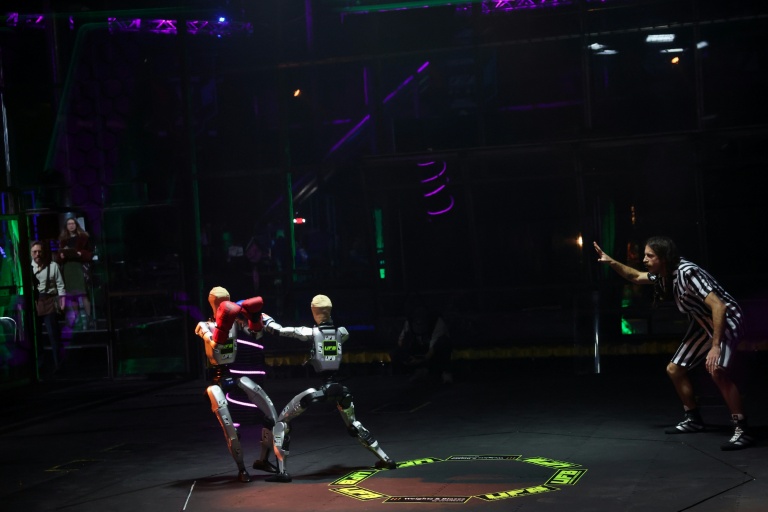
Two humanoid robots roughly the size of schoolchildren faced off in a boxing ring during a live demonstration staged alongside the Consumer Electronics Show in Las Vegas. The exhibition, branded as the Ultimate Fighting Bots competition, took place at the BattleBots Arena and was organized as an entertainment focused showcase rather than a formal research benchmark.
According to the report published by Digital Journal, the robots were humanoid in form, with articulated arms, legs, and torsos designed to resemble a simplified human body plan. Each robot was controlled remotely by a human operator, with movements mirrored in real time inside the ring.
Teleoperation and control challenges
The matches emphasized the current state of humanoid teleoperation rather than autonomous decision making. Human pilots executed punches, defensive motions, and balance corrections using control interfaces that translated operator input into robot motion.
Such scenarios highlight several technical constraints that remain central to humanoid development:
- Latency between operator input and robot actuation, which affects timing and stability.
- Dynamic balance under rapid upper body motion, especially during impacts.
- Mechanical robustness of joints and actuators during repetitive, high force movements.
Entertainment versus practical deployment
While the event was framed as a spectacle for CES attendees, it also served as a visible demonstration of full body humanoid coordination under stress. The organizers positioned the competition as a way to make robotics more accessible to the public, rather than as a preview of near term industrial or service deployments.
For practitioners, the demonstration underscored the gap between controlled lab environments and unpredictable physical interactions. Boxing style movements introduce forces and failure modes that are rarely explored in conventional humanoid demos, which typically focus on walking, object manipulation, or scripted tasks.
Implications for humanoid development
Events like this reflect growing interest in using public demonstrations to test humanoid hardware limits. However, the relevance to real world applications depends on whether insights from such demonstrations feed back into actuator design, control software, and safety systems.
As humanoid robots move toward industrial, logistics, and service roles, developers continue to prioritize stability, reliability, and safe human interaction over spectacle. The CES boxing demo provided a vivid, if unconventional, snapshot of where teleoperated humanoid systems stand today.