Morgan Stanley identifies humanoid robot supply chain leaders
Morgan Stanley has identified 25 companies it believes are best positioned in the humanoid robot supply chain, according to a research note cited by Business Insider on December 8. The bank estimates the humanoid robot market could be worth more than $5 trillion by 2050, framing the opportunity as much broader than the small group of companies currently building complete humanoids.
How Morgan Stanley sees the humanoid robot supply chain
The note centers on foundational technologies rather than finished robots. Morgan Stanley said the list focuses on companies with expertise in AI and computing chips, cameras and perception, and sensors and movement technology, areas that sit underneath most humanoid development programs.
That framing is important because it shifts attention away from headline robot brands and toward the parts of the stack that may scale first. As Business Insider reports, Morgan Stanley said the list is intended to help investors look beyond humanoid robot manufacturers and focus on suppliers that could benefit if the category becomes mainstream.
The 25 names span internet platforms, semiconductor companies, sensor makers, and automotive electronics suppliers. They are Baidu, iFlytek, Desay, Horizon Robotics, Alibaba, Samsung Electronics, NVIDIA, Cadence, Synopsys, ARM, AMD, Texas Instruments, Samsung Electro-Mechanics, Onsemi, Microchip, Sony, Ambarella, NXP, ROHM Semiconductor, Melexis, STMicroelectronics, Infineon, Renesas, Joyson, and Hesai.
Adoption may stay slow until 2035
Morgan Stanley paired its long term optimism with a cautious near term timeline. The analysts estimated that more than a billion humanoid robots would be deployed worldwide by 2050, but wrote that adoption would be “relatively slow” until at least 2035 as the technology continues to develop.
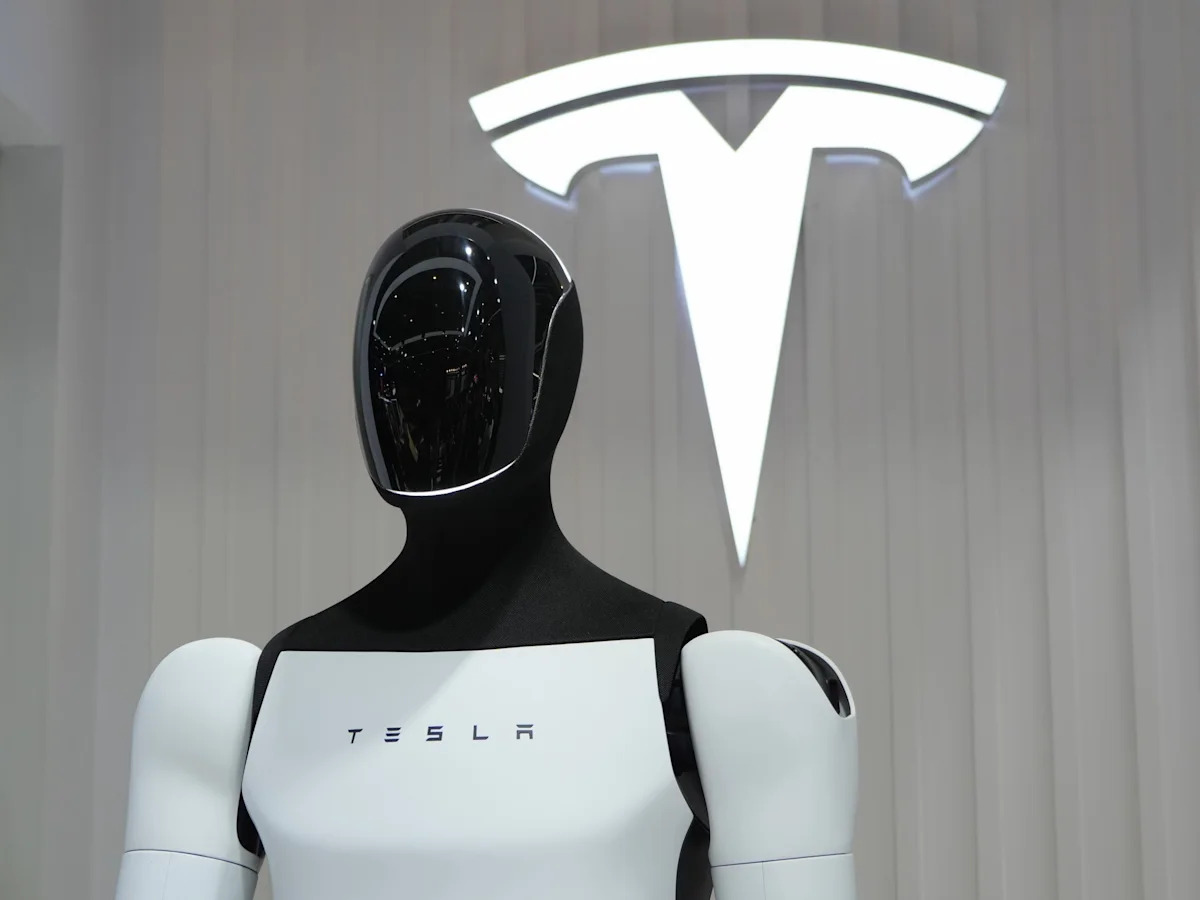
That slower ramp contrasts with the increasingly aggressive public messaging coming from robot developers. The source article notes that Tesla is set to begin mass production of Optimus by the end of next year, although the company has not said how many units it expects to build, while XPeng unveiled its humanoid robot Iron last month.
The article also cites Elon Musk’s claim from last month that Optimus could “eliminate poverty” and expand the global economy by a factor of 10. Morgan Stanley’s note takes a much more structured view, emphasizing the scale of the opportunity while also signaling that commercial adoption is unlikely to move in a straight line.
Why the supplier focus matters
Several of the companies highlighted by Morgan Stanley sit in parts of the stack that are easy to overlook when humanoid coverage centers on full body demos. The analysts specifically pointed to Hesai, saying its lidar sensors could help humanoid robots improve navigation and situational awareness, and to Synopsys, whose semiconductor designs were described as relevant to humanoid robot brains.
The timing also intersects with broader activity around enabling technologies. NVIDIA announced on December 1 that it would make a $2 billion investment in Synopsys, a detail included in the source report and one that underscores how closely the humanoid narrative is tied to compute, chip design, and perception hardware.
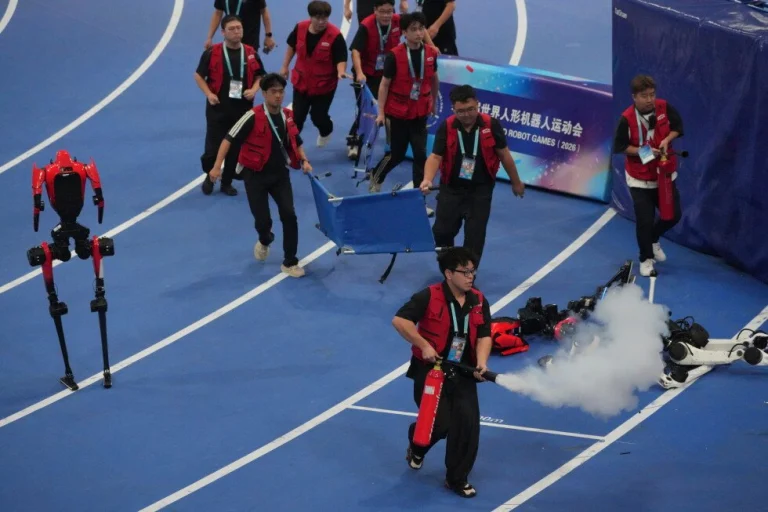
At the same time, the sector is showing signs of overheating in some markets. The article says China warned last week that a bubble risked forming in its robotics industry, with more than 150 companies competing to roll out humanoid robots. For operators and technical decision makers, that leaves a clear near term question: which suppliers become common building blocks across multiple humanoid platforms, and which forecasts remain mostly aspirational until real deployments begin to scale.
Source: aol.com