1X Neo and IHMC Alex point to broader humanoid robot adoption
Humanoid robot adoption is moving beyond research demos and toward distinct use cases in homes and workplaces, according to a Florida Politics technology column that surveys recent examples across the sector. The piece cites IHMC’s Alex and Nadia in Pensacola, 1X’s Neo in California, Tesla’s Optimus, and market activity around Figure AI, Agibot and Unitree as signs that the category is broadening even if commercialization remains uneven.
Humanoid robot adoption is splitting into separate tracks
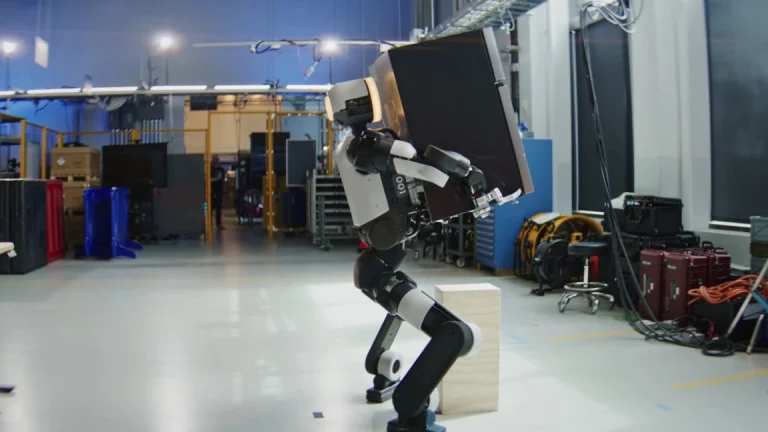
The clearest point in the column is the contrast between machines built for demanding field conditions and those aimed at domestic assistance. IHMC’s Alex is described as a fast humanoid designed for harsh environments such as disaster recovery or military missions, while 1X’s Neo is presented as a household assistant meant for chores and other everyday tasks. That difference in intended use suggests the market is not forming around a single humanoid model.
As Florida Politics reports, IHMC represents the research-heavy end of the spectrum. The Pensacola institute has two humanoid platforms, the long-running Nadia and the newer Alex, and the work is backed by the Office of Naval Research and the Army Research Laboratory. In practice, that places IHMC’s work closer to capability development than to mass consumer rollout.
IHMC and 1X define different commercialization paths
1X, by contrast, is framed as a company pushing humanoids toward broader access. The column says Neo can be pre-ordered for $20,000 or via a $500 monthly subscription, with shipments expected by the end of the year. It also describes the robot as able to chat, joke and learn, features that place it in a domestic service role rather than in industrial mobility alone.
The same section of the column points to activity beyond the product itself. According to Florida Politics, 1X has more than 100 job openings and is targeting delivery of the first 10,000 Neo units this year. If those figures hold, they would mark one of the more aggressive near-term volume targets cited in the source, even though the article does not offer independent verification or detail on how those units will be deployed.
Tesla, Figure AI and China add broader market context
The column also places Tesla Optimus in the same consumer-facing conversation. It says pre-orders for Optimus range from $20,000 to $70,000, with shipping expected next year, although the author notes that product information is not easy to find in Tesla’s public FAQs. That comparison is useful less as a price benchmark than as evidence that multiple companies are now testing similar assumptions about what buyers may pay for a humanoid assistant.
On the competitive side, the piece says Figure AI was valued at $39 billion last year and that China has more than 200 companies working in humanoid robotics, including Agibot and Unitree. Those references do not provide technical detail, but they reinforce the scale of capital and industrial interest forming around the segment. For operators and technical buyers, the implication is that vendor choice may expand quickly, even as product maturity varies sharply from one platform to another.
What this means for the next phase
The source article is written as broad industry commentary rather than a formal market report, but it captures a real shift in how humanoid systems are being positioned. Research organizations are still focused on performance in difficult environments, while commercial vendors are increasingly presenting humanoids as service machines for homes and routine tasks. That distinction will shape how buyers judge readiness, safety and return on investment.
What remains unresolved is which of these paths will scale first. Pre-orders, valuations and hiring plans show momentum, but the harder questions involve reliability, support and whether stated household use cases justify the hardware cost. Even so, the examples gathered by Florida Politics show that humanoid robot adoption is no longer confined to lab footage alone, and the next stage will be measured by deliveries and real task performance rather than by concept videos.
Source: floridapolitics.com