Unitree H1 humanoid reaches 10 m/s sprint speed milestone
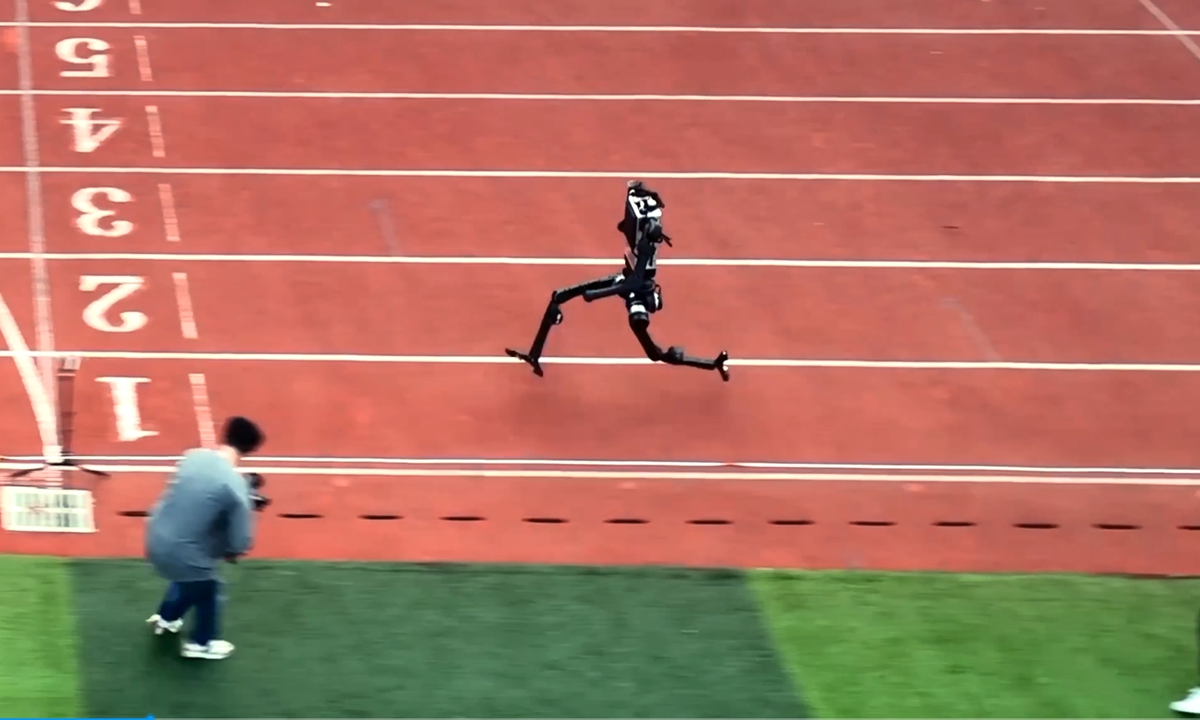
Unitree Robotics has released new test footage indicating that its H1 humanoid robot can reach sprint speeds of approximately 10 meters per second, placing it close to elite human sprint performance levels. The result, captured on an athletics track, highlights rapid progress in dynamic locomotion for full size humanoid systems.
According to the company, the H1 recorded a peak speed of 10.1 meters per second as it passed a timing device during testing. The measurement was accompanied by a note that instrumentation error may be present, but the result still represents a significant step forward in humanoid mobility. For context, Usain Bolt’s 100 meter world record corresponds to an average speed of about 10.44 meters per second.
The H1 platform is designed with proportions similar to an average adult human. The robot has a combined thigh and calf length of around 80 centimeters and a total weight of approximately 62 kilograms. Matching human like morphology with high speed locomotion has been a persistent challenge in humanoid robotics, particularly due to balance constraints, actuator limits, and control complexity.
Unitree CEO Wang Xingxing has stated that humanoid robots could break the 10 second barrier in the 100 meter sprint by mid 2026, suggesting a near term target of surpassing top human sprint performance. While such projections remain to be validated under standardized conditions, the latest demonstration underscores the pace of improvement in control systems and actuation.
Running performance has become a visible benchmark across the humanoid robotics sector in China. At the 2025 World Humanoid Robot Games, the Tien Kung Ultra robot completed the 100 meter race in 21.50 seconds, outperforming competing H1 units at the event. The same platform also completed a half marathon in approximately 2 hours and 40 minutes, demonstrating endurance capabilities alongside speed.
Other developers are also targeting high speed locomotion. MirrorMe introduced its Bolt humanoid earlier in 2026, claiming a peak running speed of 10 meters per second for a full size system measuring 175 centimeters in height and weighing 75 kilograms.
Upcoming events are expected to further test these capabilities in more competitive and realistic settings. The second Humanoid Robot Half Marathon in Beijing is scheduled for April, with more than 70 teams already conducting trial runs. Organizers anticipate multiple humanoid robots competing side by side, offering a clearer view of comparative performance across platforms.
From a technical perspective, sustained high speed running in humanoid robots depends on tight integration between perception, control algorithms, and hardware design. Achieving stable gait cycles at these velocities requires precise coordination of joint actuation, real time feedback, and energy management. The latest H1 results suggest increasing maturity in these areas, though standardized benchmarking and repeatable testing conditions remain critical for industry validation.
Source: share.google