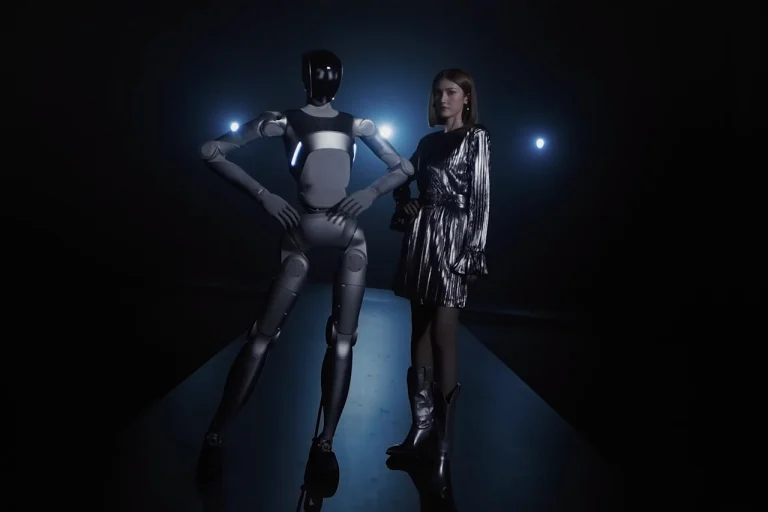
1X opens California factory, aims for 10,000 Neo humanoids in year one — and 100,000 by end of 2027
1X Technologies AS opened a 58,000-square-foot factory in Hayward, California, on April 30 to build the Neo humanoid, marking the Norway-founded, OpenAI-backed startup’s most concrete step from R&D into volume manufacturing. Bloomberg reports the site is sized to produce 10,000 robots in its first year, with a longer-term target of 100,000 units by the end of 2027 once a larger facility under construction in San Carlos comes online. Shipments from Hayward are expected to begin by the end of this year.
A factory, not a pilot line
The Hayward site is being framed as a factory rather than a lab or demonstration cell — a distinction that matters in a sector where most announcements still center on prototypes, demos, or research milestones. Manufacturing readiness is a separate problem, and a much harder one.
A site of this size implies 1X is now focused on the operational reality of commercializing a humanoid: repeatable assembly, calibration, quality control, and a process for turning completed machines into shipped products. The build pace is also notable. Bloomberg reports the facility was completed in a matter of months, suggesting 1X is deliberately compressing the timeline as competition around humanoid commercialization intensifies.
The company plans to relocate its headquarters again — from Palo Alto, where it moved from Norway last summer, to San Carlos — once that larger facility is ready. Dar Sleeper, 1X’s vice president of design, product and marketing, told Bloomberg the company has already outgrown its current space.
Vertical integration as a strategic bet
The most distinctive element of 1X’s approach is how much of the robot it builds in-house. According to Bloomberg, 1X is winding its own copper coils, building its own motors, manufacturing its own electronics, and producing its own batteries on site. Sleeper described the level of vertical integration as unmatched in the humanoid space and in hard tech more broadly.
That choice is unusual at this stage of the industry. Most humanoid programs lean heavily on external suppliers for actuators, drive electronics, and battery packs. 1X is betting that owning these subsystems shortens the loop between data collected in the field and design changes pushed back into the next robot — a faster iteration cadence at the cost of much higher capex and a much larger operational surface to manage.
It also reads as a hedge against supply chain risk at a time when many tech companies are reshoring critical components. The bulk of humanoids today are manufactured in China, and US factories of this kind remain rare.
What’s actually rolling off the line
Some of the Neo heads coming off the Hayward line differ from the publicly shown version. Sleeper described an optimized eye socket that widens the field of view, improved lenses, and a soft head that can be squeezed. Inside, each unit carries a custom camera module, in-house electronics, and an Nvidia Thor chip for onboard processing.
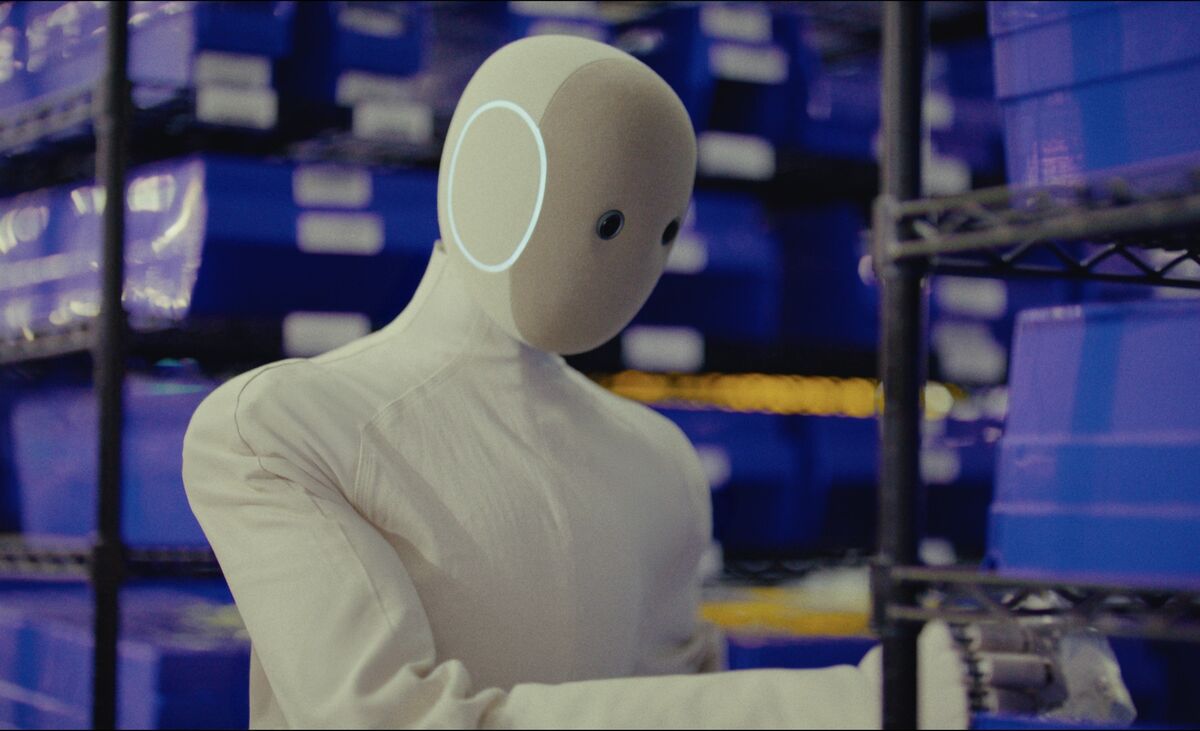
Final assembly mounts the components to a spine, after which each Neo runs through what Sleeper calls “morning stretches” — squats and yoga-like poses — as a movement and quality check before the unit is wrapped in its soft, clothing-like fabric exterior. Finished robots ship in a large white protective case that Bloomberg likens to a human-sized AirPods container.
Notably, the factory does not yet use Neos to build more Neos. Founder Bernt Børnich confirmed that as a long-term goal, but the current line is staffed by over 200 people — and the company published a video of the facility on Thursday that, unusually for the sector, leans into that fact rather than away from it.
A consumer humanoid at $20,000
Neo is currently available for pre-order at $20,000, positioned as a domestic helper for tasks like folding laundry and tidying. It is designed to talk, learn new skills over time, and — eventually — assist with elder care. The soft, human-like body has driven much of the social media interest around the product.
That consumer framing puts 1X on a different path from peers focused on tightly controlled industrial deployments. Tesla, Figure AI, Agility Robotics, and Apptronik are the other notable US humanoid makers, but the global market is still dominated by Chinese firms, which accounted for the majority of the roughly 13,000 humanoid units shipped worldwide last year.
A consumer-facing product also raises the bar on execution. Scale is not just unit count. It is deployment, support, maintenance, and the practical demands of a wider installed base — none of which a 10,000-unit annual capacity number tells you anything about on its own.
Funding and customer commitments
1X last raised about $100 million in a Series B led by EQT Ventures in January 2024, bringing total funding to roughly $123.5 million. The company declined to share a current valuation. EQT AB, the private equity firm, has separately said it plans to deploy 10,000 Neos across its portfolio companies — a commitment that, if delivered, would absorb a meaningful share of the Hayward line’s first-year output.
“Critical mass in two years”
Børnich told Bloomberg he believes humanoids will reach critical mass in society within roughly two years, and that scaling US manufacturing will require far more skilled labor than the industry currently has access to. He was also unusually direct about wanting to avoid overpromising — framing the published factory video as part of a deliberate transparency push at a moment when most humanoid makers are showing carefully edited demo reels rather than production floors.
What to watch next
The next markers are concrete: first Hayward shipments by year end, continued construction progress in San Carlos, and the unveiling of the next-generation Neo with the optical and head-mechanical changes Sleeper hinted at. Bloomberg’s report did not include details on first-shipment customers beyond the EQT portfolio commitment, leaving open the question of how broad the initial consumer rollout will actually be.
If the Hayward line delivers on its 10,000-unit target and the company holds to its 100,000-by-end-of-2027 trajectory, 1X will become an early test of whether a vertically integrated, consumer-focused humanoid program can move beyond limited batches into repeatable production at meaningful scale.
Source: bloomberg.com