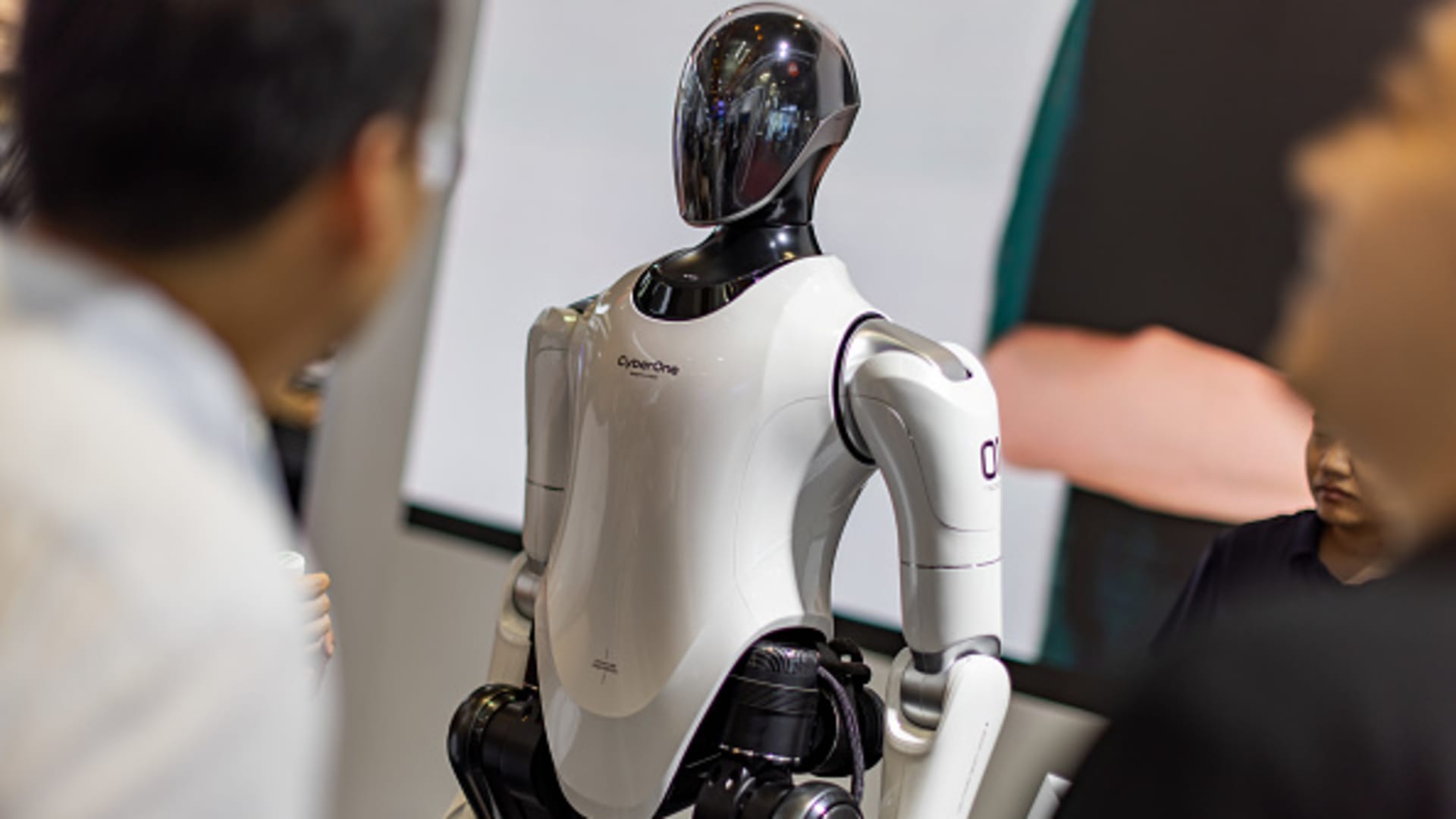
Xiaomi Trials Humanoid Robots at China EV Factory Assembly Line
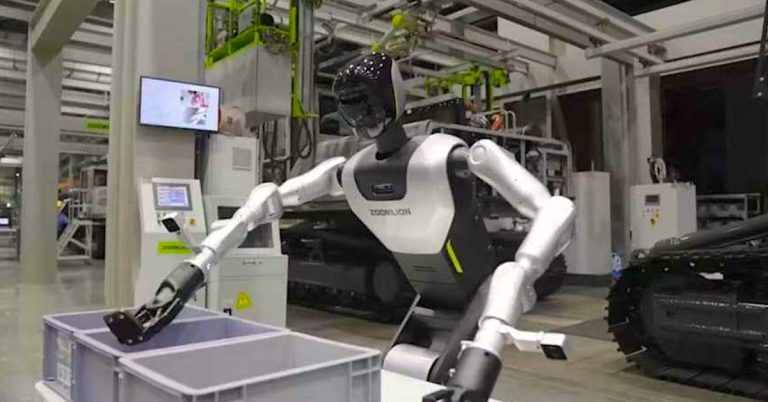
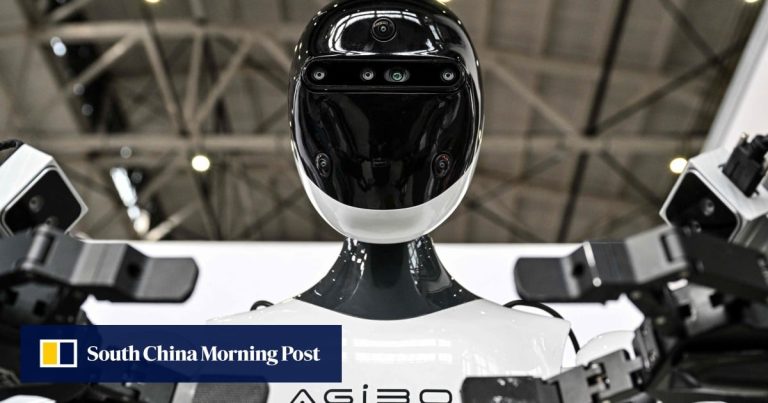
Xiaomi has begun trialing its self developed humanoid robots inside its electric vehicle production facilities, marking one of the most visible factory level experiments with general purpose humanoids by a major Chinese manufacturer.
2026 Humanoid Robot Market Report
160 pages of exclusive insight from global robotics experts – uncover funding trends, technology challenges, leading manufacturers, supply chain shifts, and surveys and forecasts on future humanoid applications.

Featuring insights from
Aaron Saunders, Former CTO of
Boston Dynamics,
now Google DeepMind

2026 Humanoid Robot Market Report
160 pages of exclusive insight from global robotics experts – uncover funding trends, technology challenges, leading manufacturers, supply chain shifts, and surveys and forecasts on future humanoid applications.
Speaking to CNBC at the Mobile World Congress trade show in Barcelona, Xiaomi President Lu Weibing said two humanoid robots are currently being tested on the company’s car assembly lines. According to Lu, the pair can complete 90% of assigned work within three hours during pilot operations.
The robots are being used for tasks such as installing nuts and moving materials. Lu emphasized that integration into a high throughput automotive environment presents specific performance constraints. In Xiaomi’s EV factory, a new car rolls off the assembly line every 76 seconds. The humanoid systems, he said, are able to keep up with that production tempo.
“To integrate robots into our production lines, the biggest challenge is for them to keep up with the pace,” Lu said. He added that humanoid robots are a key focus for improving factory productivity and could eventually replace humans for certain types of work or perform tasks beyond human capability.
Despite the headline performance figures, Xiaomi characterizes the deployment as an early stage trial. Lu compared the robots’ current role to that of interns rather than fully assigned production workers, indicating that they are not yet embedded as standard labor within the line.
Xiaomi first introduced its CyberOne humanoid robot in 2022, but the company does not currently sell the platform commercially. The factory trial suggests that internal industrial use may serve as a testbed for refining manipulation, endurance, and integration capabilities before any broader rollout.
The move comes amid intensifying humanoid development efforts across China. Multiple domestic firms are advancing humanoid platforms, and analysts at RBC Capital Markets forecast a global total addressable market of $9 trillion by 2050, with China accounting for more than 60% of that opportunity.
For Xiaomi, which expanded from consumer electronics into electric vehicles in recent years, humanoid robotics represents a potential long term productivity lever. However, Lu cautioned that it remains too early to determine the ultimate size of the market or the commercial trajectory of humanoid systems.
The trial underscores a broader trend in which EV manufacturers are exploring humanoid form factors as flexible complements to fixed industrial automation. Whether such systems can transition from pilot status to sustained, economically justified deployment will depend on reliability, task coverage, and integration costs under real world factory conditions.
Source: cnbc.com