Samsung Targets 2030 Global Factory Shift With Humanoids
Samsung Electronics has outlined a 2030 vision to transform its global manufacturing operations through the deployment of humanoid robots and agentic AI. The initiative positions bipedal systems and autonomous software agents as central components in a broader effort to redesign production workflows from warehousing to final shipment.
2026 Humanoid Robot Market Report
160 pages of exclusive insight from global robotics experts – uncover funding trends, technology challenges, leading manufacturers, supply chain shifts, and surveys and forecasts on future humanoid applications.

Featuring insights from
Aaron Saunders, Former CTO of
Boston Dynamics,
now Google DeepMind
2026 Humanoid Robot Market Report
160 pages of exclusive insight from global robotics experts – uncover funding trends, technology challenges, leading manufacturers, supply chain shifts, and surveys and forecasts on future humanoid applications.
Humanoids on the Factory Floor
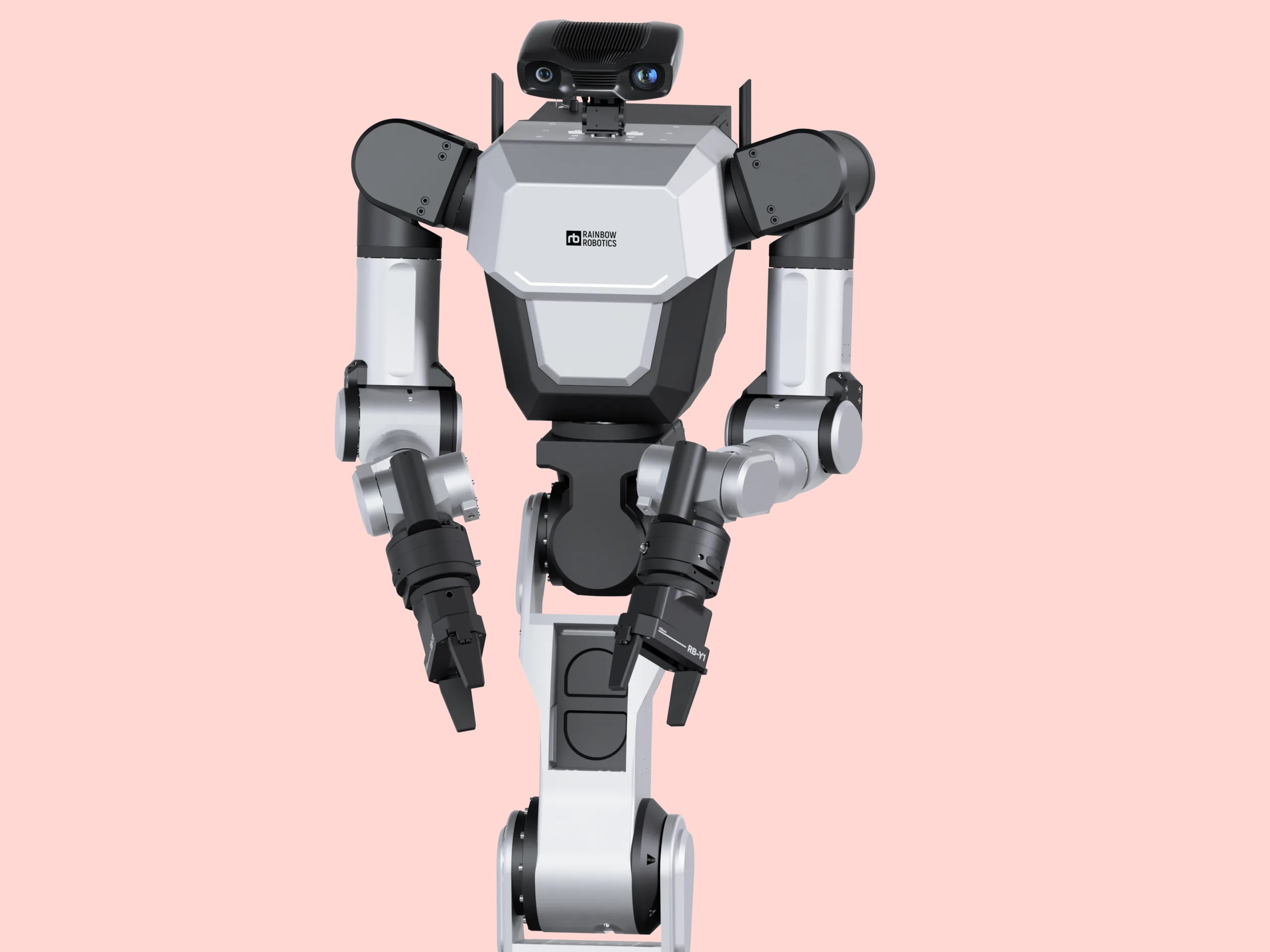
Samsung has previously focused its in house robotics activity on commercial products such as robotic vacuum cleaners. However, the company has also invested in humanoid robot developers, including South Korea based Rainbow Robotics. Samsung has indicated that it intends to deploy Rainbow Robotics’ RB-Y1 humanoid robot on its manufacturing lines.
The move signals a shift from peripheral robotics applications to direct integration of humanoid systems into core industrial processes. While detailed task allocations have not yet been disclosed, the reference to manufacturing line deployment suggests roles in material handling, assembly support, or logistics operations where bipedal mobility and human like reach may provide operational flexibility.
Agentic AI as a Coordinating Layer
Alongside humanoid robots, Samsung plans to introduce agentic AI across its production network. The company states that AI systems will enhance quality and productivity at every production step, from material warehousing to shipment. Additional AI applications are expected to target workplace safety and environmental health management.
The pairing of humanoid hardware with agentic AI software points to a coordinated automation architecture in which physical robots execute tasks while autonomous AI agents monitor, optimize, and adapt workflows in real time. This approach reflects a broader industry trend toward tightly integrated physical and cognitive automation.
Industry Context
Samsung’s strategy aligns with a growing push among major manufacturers to introduce humanoid robots into factory environments. In October 2025, Apple supplier Foxconn announced plans to use Nvidia powered bipedal robots to assemble AI servers within six months. Hyundai has also ordered 30,000 Atlas humanoid robots from its subsidiary Boston Dynamics, with deployment planned across its car factories in the United States.
These initiatives suggest that large scale industrial players are moving beyond pilot projects toward structured rollouts of humanoid platforms. For robotics practitioners and factory operators, the emphasis is shifting from proof of concept demonstrations to integration, reliability, and governance.
Governance and Next Steps
Samsung is expected to provide further details on its AI strategy at Mobile World Congress in Barcelona in March, including its governance framework for overseeing AI deployment. The governance component may prove critical as humanoid robots and autonomous software agents become embedded in safety sensitive production environments.
As 2030 approaches, Samsung’s roadmap underscores a significant strategic bet: that humanoid robots, supported by agentic AI, can deliver measurable gains in productivity, quality control, and operational resilience across a global manufacturing footprint.
Source: notebookcheck.net