Humanoids Summit – Silicon Valley
The third edition of the Humanoids Summit was held at the Computer History Museum in Silicon Valley from December 11–12, 2025, following the previous edition in London. The event brought together approximately 2,000 participants from 40 countries, featuring 75 speakers, 60 exhibitors, and more than 60 journalists.
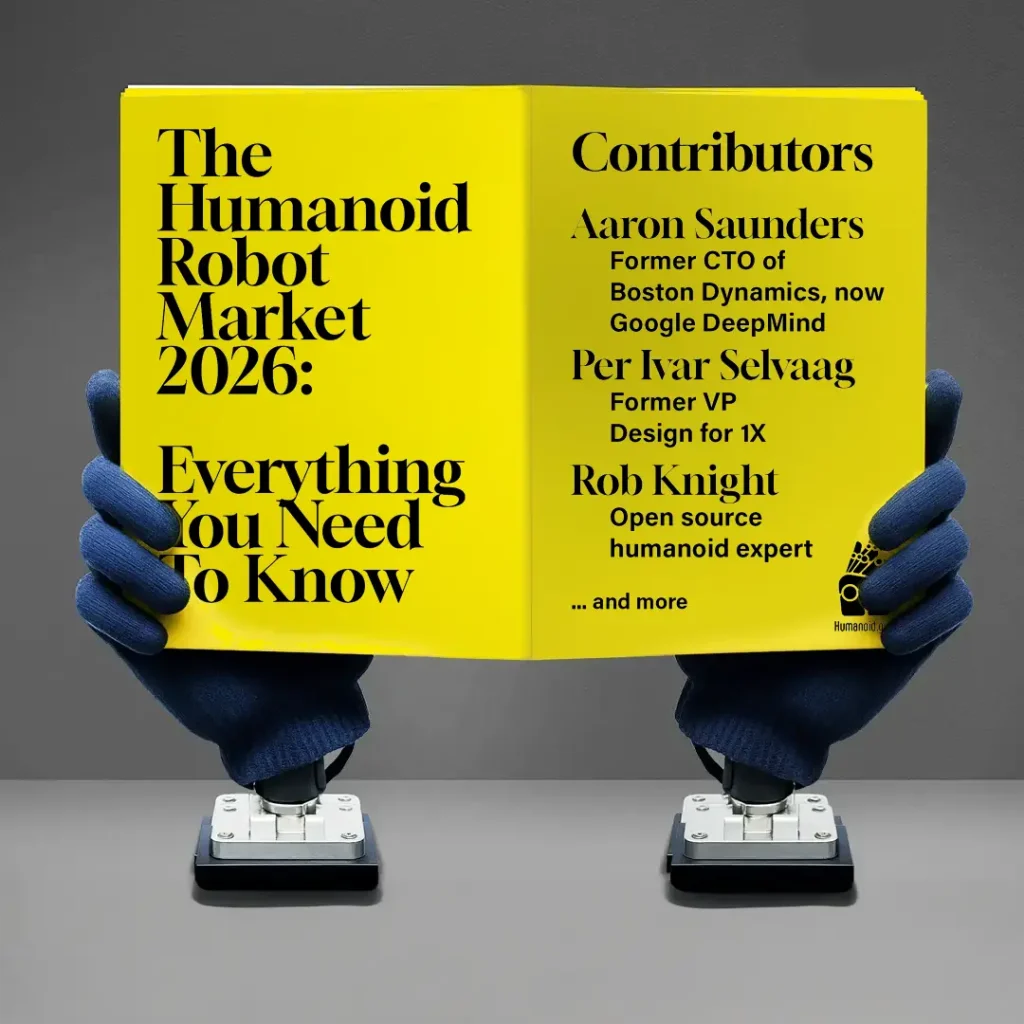
2026 Humanoid Robot Market Report
160 pages of exclusive insight from global robotics experts – uncover funding trends, technology challenges, leading manufacturers, supply chain shifts, and surveys and forecasts on future humanoid applications.

Featuring insights from
Aaron Saunders, Former CTO of
Boston Dynamics,
now Google DeepMind
2026 Humanoid Robot Market Report
160 pages of exclusive insight from global robotics experts – uncover funding trends, technology challenges, leading manufacturers, supply chain shifts, and surveys and forecasts on future humanoid applications.


Through a series of presentations, exhibition booths, and panel discussions, the third edition underscored the growing global interest in humanoid robotics. It showcased significant advancements in robotics software and hardware that are increasingly paving the way for the commercial deployment of humanoid systems.
2000
Participants
40
Countries
75
Speakers
60
Exhibitors
60+
Journalists
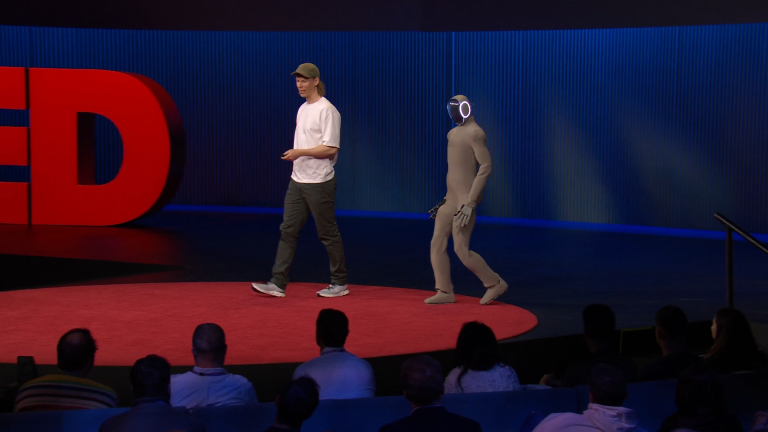
In the opening keynote, Moritz Bächer offered insights into Disney’s Robotics Character Platform. Among the highlights was the robot version of Olaf, the snowman from Frozen, demonstrating exceptional interactive capabilities powered by reinforcement learning with animation-based target states. Abhinav Gupta (SkildAI) showcased the potential of their scalable robotics foundation model, emphasizing that bipedal humanoids equipped with SkildAI’s AI can successfully climb stairs, a capability still rare despite the widespread adoption of legged designs. Continuing the AI theme, Allen Ren (Physical Intelligence) illustrated how Vision-Language-Action models can improve through real-world reinforcement learning, exemplified by their Pi*0.6 model preparing espresso. Additionally, Carolina Parada presented Google DeepMind’s approach to evaluating Gemini Robotics policies within the Veo World Simulator.


Leading humanoid robotics companies from China, Europe, and the United States showcased their latest technical and commercial advancements. From China, Jian Yao (Xpeng) introduced new AI models enabling their Iron robot to move and communicate with human-like capabilities, while He Wang (Galbot) presented their synthetic data-driven approach to grasp learning and announced the deployment of their robots in approximately 100 pharmacy warehousing operations. Headquartered in Europe, Jochen Rudat of Humanoid announced that the company secured over 19,500 robot pre-orders and completed six proofs-of-concept in 2025. In the United States, Pras Velagapudi (Agility Robotics) shared key lessons on humanoid implementation, highlighting critical factors for deployability such as configurability, reliability, and safety. Additionally, Nic Radford of Persona AI explained the company’s strategic focus on heavy industry and provided updates on the development of humanoids designed for ship welding applications.


In addition to humanoid manufacturers, consulting firms contributed valuable perspectives on the emerging industry. Prasanna Mantravadi (FEV Consulting) highlighted lessons from the automotive sector, which shows similarities to humanoid robotics, such as the mass production of electromechanical components and the integration of AI technologies in autonomous operation.

Beyond the presentations, numerous exhibitors showcased their robotics innovations through live demonstrations. The conference featured adult-sized humanoids, such as the Fourier GR-3 and Robotera L7, alongside smaller, more portable models like the Booster T1/K1 and High Torque Pi/Pi+. Particularly noteworthy were Weave Robotics’ T-shirt-folding robots, which are already operational in laundromats across San Francisco.

Component suppliers also showcased innovative products, including actuator technologies from Maxon, Novanta, and Synapticon. Particularly noteworthy were Manus’ new Metagloves Pro Haptic, featuring vibrational feedback that enables touch-sensitive hand teleoperation.

Several panel discussions provided additional perspectives on the future of humanoid robotics. One notable session featured Jeff Burnstein (A3), Chaoyi Li (Booster Robotics), Kimate Richards (AWS), and Donny Li (Realman Robotics), who examined China’s robotics surge and emphasized that collaboration between China and the United States could accelerate the global rollout of humanoid robots. In another discussion on commercialization, Dr. Dominik Boemer (FEV Consulting), Elliot Helms (Novanta), and Max Goncharov (RemBrain), moderated by Anna Tong (Forbes), stressed the importance of considering all robotic embodiments, e.g., humanoids with wheeled platforms, to introduce technical complexity only where it is truly necessary.


Finally, Modar Alaoui, Founder of the Humanoids Summit, announced that the next edition will take place in Tokyo, Japan, on May 28–29, 2025, at the Takanawa Convention Center. We look forward to seeing you in Tokyo!

This field report was authored by Dr. Dominik Boemer of FEV Consulting (https://www.linkedin.com/in/dominikboemer/). FEV Consulting has supported leading humanoid robotics companies with strategic market advisory, technology consulting, business strategies, cost and value management, and benchmarking. Leveraging its extensive expertise in humanoid robotics, the company is now actively fostering the growth of the humanoid ecosystem, for example, by helping suppliers establish a foothold in this emerging market. For more information, visit https://www.fev-consulting.com/advanced-robotics/