Eyou launches automated humanoid robot joint production line
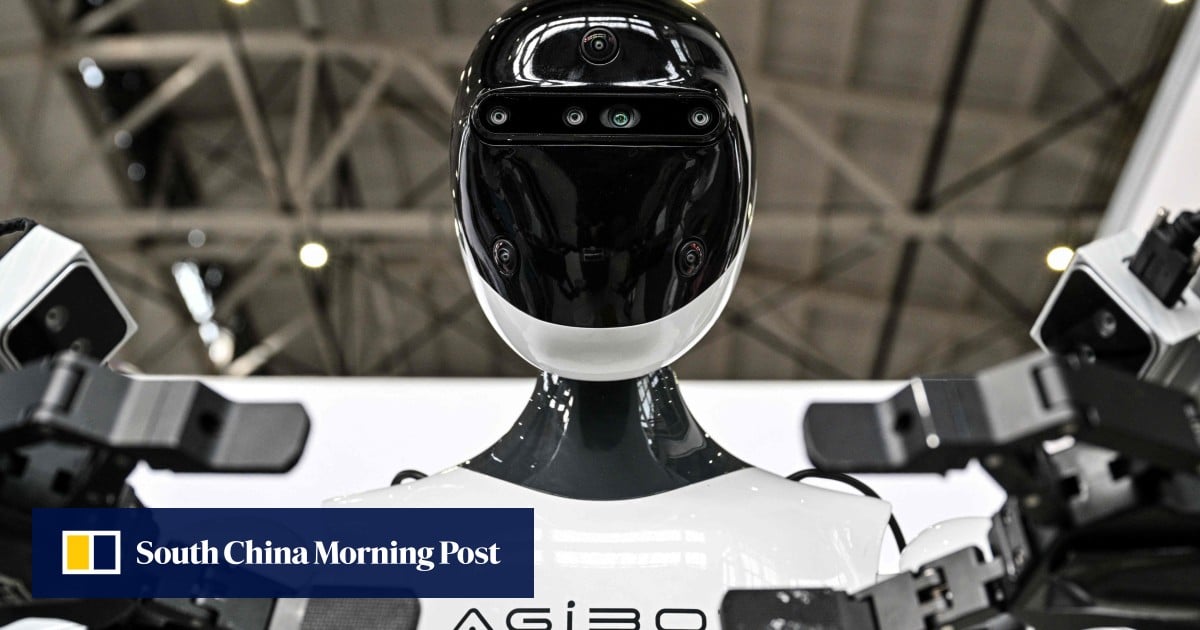
China-based Eyou Robot Technology has opened what it says is the world’s first fully automated production line dedicated to humanoid robot joints, a critical subsystem for bipedal and dexterous humanoid platforms. The move signals growing industrialization across the humanoid supply chain as manufacturers prepare for higher shipment volumes over the next several years.
2026 Humanoid Robot Market Report
160 pages of exclusive insight from global robotics experts – uncover funding trends, technology challenges, leading manufacturers, supply chain shifts, and surveys and forecasts on future humanoid applications.

Featuring insights from
Aaron Saunders, Former CTO of
Boston Dynamics,
now Google DeepMind

2026 Humanoid Robot Market Report
160 pages of exclusive insight from global robotics experts – uncover funding trends, technology challenges, leading manufacturers, supply chain shifts, and surveys and forecasts on future humanoid applications.
According to details reported by Post Magazine, the new line is designed to produce integrated joint modules at scale, combining motors, reducers, sensors, and control components into standardized units. Joint assemblies are among the most complex and cost intensive parts of humanoid robots, directly affecting payload, agility, reliability, and power efficiency.
Why joint manufacturing matters
Humanoid robots require dozens of high precision joints, often with torque density and backdrivability targets that exceed those used in conventional industrial robots. Manual or semi-automated production has limited throughput and consistency, especially as developers push toward mass production.
Eyou’s automated line aims to address these constraints by improving yield, repeatability, and cost control. Automated assembly and testing can also shorten qualification cycles, an important factor as humanoid developers iterate rapidly on mechanical and control designs.
Positioning for demand growth
The investment reflects expectations of a near-term increase in humanoid robot deployments across logistics, manufacturing, and service environments. Industry forecasts cited in the report project global humanoid robot shipments reaching the six figure range by 2027, a level that would require a more mature component supply base.
By focusing on joint modules rather than complete robots, Eyou is positioning itself as a tier-one supplier to multiple humanoid developers. This mirrors earlier patterns in industrial robotics, where specialized component manufacturers scaled ahead of system integrators.
Implications for the humanoid ecosystem
The launch highlights a broader shift from prototype-centric development to production engineering in humanoid robotics. As automated lines come online for key subsystems such as joints, actuators, and hands, barriers to volume manufacturing are likely to fall.
For robot builders and operators, increased availability of standardized, high quality joint modules could reduce bill of materials risk and accelerate deployment timelines. The move also underscores China’s growing role not only in humanoid robot assembly, but in the upstream manufacturing infrastructure that supports the sector.