
China’s Humanoid Robot Makers Gain Early Market Lead Over US Rivals
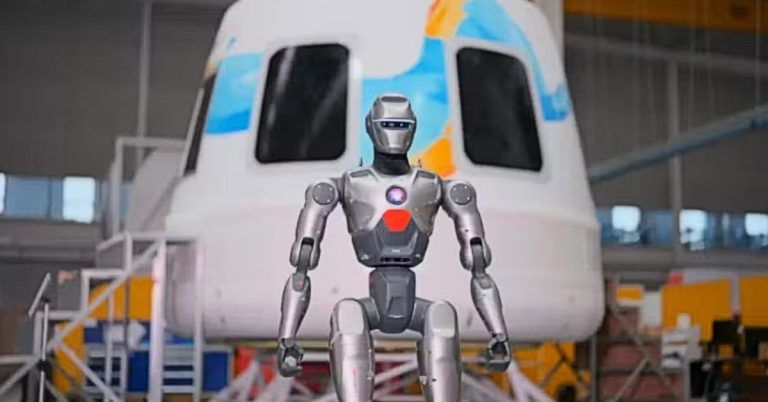
Chinese humanoid robot developers are establishing an early commercial lead over their US counterparts, shipping more units and accelerating deployment cycles in a market that remains nascent but strategically significant.
2026 Humanoid Robot Market Report
160 pages of exclusive insight from global robotics experts – uncover funding trends, technology challenges, leading manufacturers, supply chain shifts, and surveys and forecasts on future humanoid applications.

Featuring insights from
Aaron Saunders, Former CTO of
Boston Dynamics,
now Google DeepMind

2026 Humanoid Robot Market Report
160 pages of exclusive insight from global robotics experts – uncover funding trends, technology challenges, leading manufacturers, supply chain shifts, and surveys and forecasts on future humanoid applications.
According to reporting by The Tech Buzz, companies including Ubtech Robotics, Unitree, Galbot, and Fourier Intelligence have collectively deployed more humanoid systems over the past year than comparable US players. The advantage is attributed not only to shipment volume but also to faster iteration and more aggressive real world deployment strategies.
From Prototypes to Field Deployments
While several American firms continue refining prototypes and navigating regulatory and commercial hurdles, Chinese manufacturers are placing humanoid robots into factories, research labs, warehouses, and healthcare pilot programs. These deployments generate operational data that feeds directly back into product development, shortening improvement cycles and strengthening system robustness.
Boston Dynamics remains a benchmark for advanced humanoid mobility through its Atlas platform, yet large scale commercialization has not materialized. SoftBank Robotics, once prominent in humanoid development with Pepper, has largely stepped back from the category. In contrast, Shenzhen based Unitree recently introduced a humanoid platform priced below 16,000 dollars, positioning cost as a competitive lever in early adoption scenarios.
Manufacturing Scale as a Strategic Asset
China’s established manufacturing ecosystem plays a central role in this momentum. Supply chains originally built for smartphones and electric vehicles now support production of actuators, sensors, and AI chips for humanoid systems. The proximity of component suppliers enables rapid prototyping and faster transition from design to production.
This infrastructure advantage supports shorter development cycles and more flexible pricing strategies. For operators evaluating pilot deployments, lower upfront costs can reduce risk and accelerate procurement decisions, particularly in industrial environments where return on investment remains under scrutiny.
AI Integration and Data Feedback Loops
AI capabilities are also shaping the competitive landscape. Companies such as Engine AI are developing neural networks tailored to bipedal locomotion and manipulation. These systems draw on large scale simulation and real world usage data, reinforcing a feedback loop in which each deployment contributes to performance gains in subsequent hardware and software revisions.
The accumulation of field data may prove decisive. In humanoid robotics, reliability in navigation, balance, and dexterous manipulation depends on exposure to varied and unpredictable environments. Broader deployment translates into richer datasets and faster tuning of perception and control stacks.
Implications for Industrial Automation
Although global humanoid unit volumes remain in the thousands rather than millions, early movers are building supply chain relationships, integration expertise, and customer references. These factors could influence which platforms become foundational in sectors such as manufacturing, logistics, healthcare, and service robotics.
Policy discussions in the United States increasingly reflect concern over technological competitiveness in advanced robotics. However, closing the gap would likely require not only increased funding but also adjustments in commercialization strategy, risk tolerance, and manufacturing integration.
The humanoid robotics market is still forming, and technical breakthroughs in vision, manipulation, and autonomy could alter competitive dynamics. For now, deployment velocity and manufacturing depth are giving Chinese firms a measurable edge in shaping the first wave of commercially viable bipedal machines.
Source: Original article