Agibot’s AI Breakthrough: Empowering Humanoid Robots for Real-World Tasks
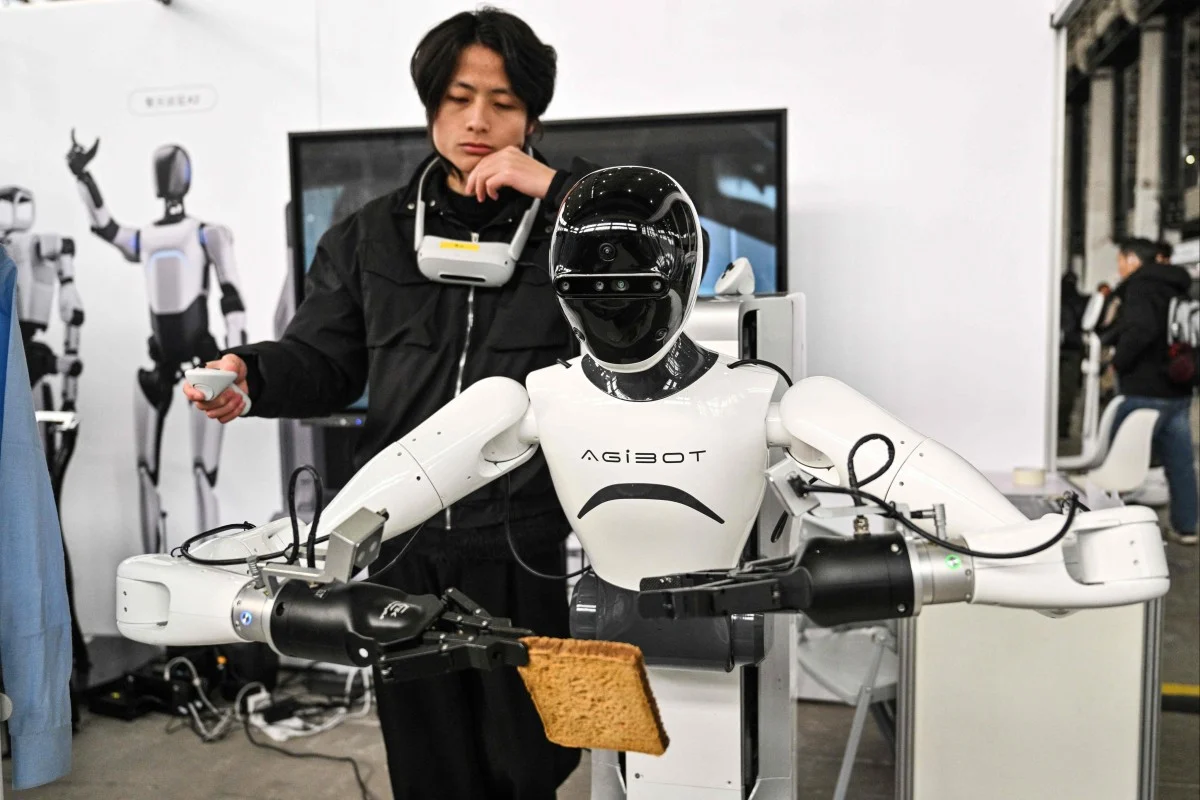
Photo: A man controls an Agibot robot at the Global Developer Conference, organised by the Shanghai AI Industry Association, in Shanghai in February. Photo: AFP
Chinese robotics company Agibot has introduced its new AI model, GO-1, designed to significantly improve humanoid robots’ ability to perform real-world tasks. Unlike traditional automation, this model enables robots to understand their environment more effectively and interact with it in a way that closely resembles human behavior.
GO-1 leverages vast datasets of images and videos to train robots in recognizing patterns, understanding movement, and adapting to different scenarios. This advancement allows humanoid robots to execute tasks with a higher degree of autonomy, making them more useful in practical applications such as household assistance, industrial work, and even public service roles.
Agibot’s innovation represents a major step toward bridging the gap between artificial intelligence and physical robotics. By combining advanced perception models with real-time decision-making, the company aims to make humanoid robots more intuitive and capable of responding to unpredictable human environments.
While the technology is still in its early stages, experts believe GO-1 could accelerate the widespread adoption of humanoid robots in everyday life. With continued development, Agibot’s AI model might redefine the future of robotics, making human-robot collaboration more seamless than ever before.